
- Deep Cleaning in Dubai
- Villa Deep Cleaning
- Floor Deep Cleaning
- Office Deep Cleaning
- Sofa Deep Cleaning
- Kitchen Deep Cleaning
- Apartment Deep Cleaning
- Restaurant Deep Cleaning
- Commercial Deep Cleaning
- Warehouse Deep Cleaning
- Balcony Deep Cleaning
- Oven BBQ Deep Cleaning
- Garage Deep Cleaning
- Gym Deep Cleaning
- Club Deep Cleaning
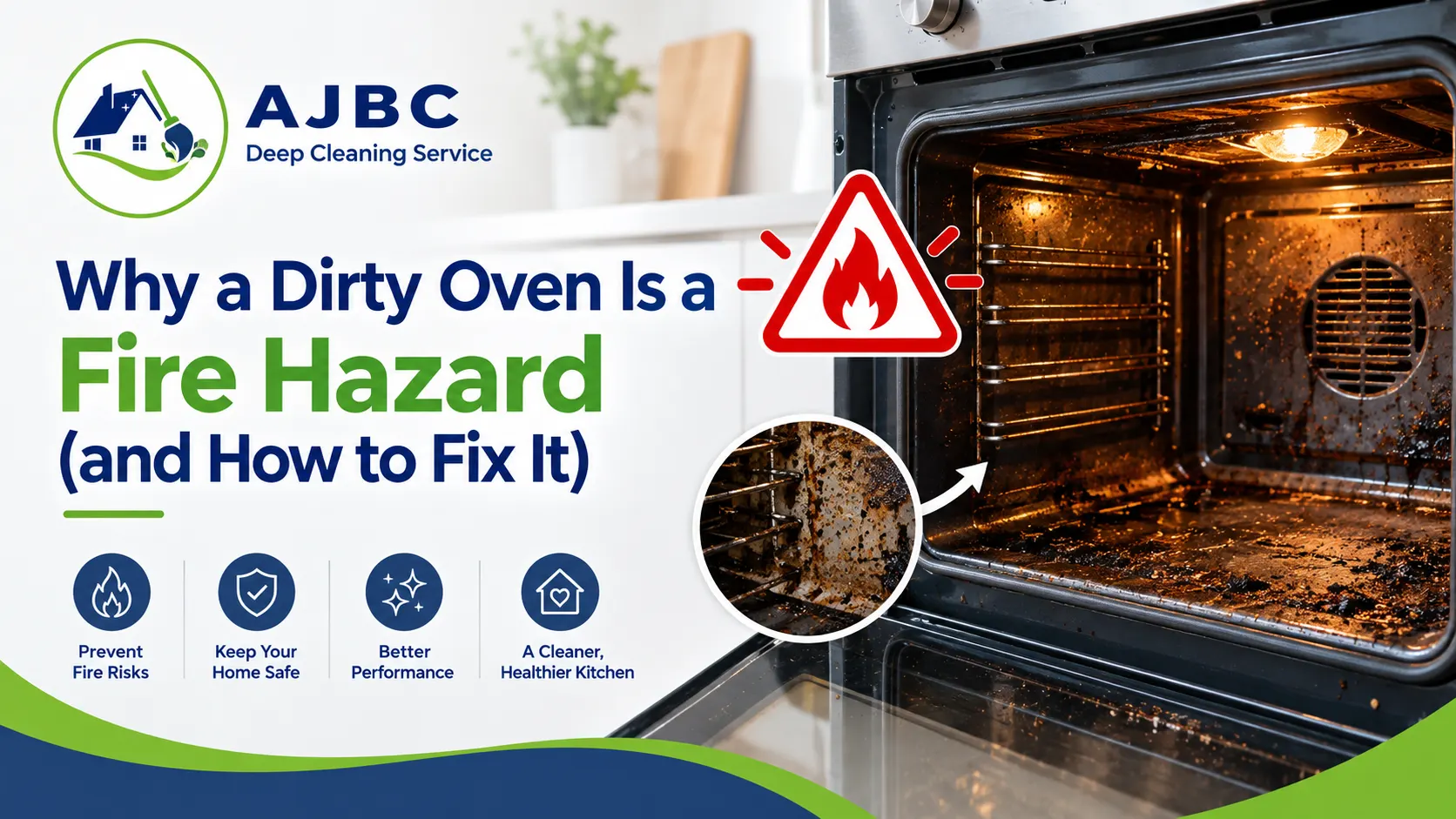
Why a Dirty Oven Is a Fire Hazard (and How to Fix It)

Key Highlights
- Grease, fat, and food residue inside an oven are flammable, and they build up silently over months of normal cooking.
- Smoke during normal cooking, a persistent burnt smell, and visible grease near the heating element are the clearest warning signs.
- Most oven fires start when old residue ignites at high temperature, not from a single dramatic spill.
- Regular cleaning removes the fuel; it doesn’t need to be complicated, but it does need to be consistent.
- If a fire starts, keep the oven door closed, switch off the heat, and never use water on a grease fire.
Introduction
Most people think of kitchen fires as something dramatic: an unattended pan, a tea towel too close to the hob. The oven rarely comes to mind, because it’s enclosed and the mess is hidden. Yet that enclosed space is exactly where grease and food residue gather, bake on, and bake on again, cook after cook, until a surface that looks merely grubby is coated in a layer of combustible material.
This guide explains why a dirty oven is a real safety issue, how to spot the warning signs, how to fix the problem safely, and what to do if a fire does start. The advice here is general household safety information, not a substitute for your appliance manual or local fire safety guidance.
Why Oven Residue Is Flammable
An oven’s job is to reach and hold high temperatures, often 200 degrees Celsius and above. Fat, oil, and sugary spills that land on the base, walls, door, or heating element don’t disappear when the oven cools. They bake into a hard, carbonized layer, and the next time the oven heats up, that layer can smoke, smolder, or ignite, especially if it’s thick or sits close to the element.
Several things make it worse:
- Layering. Each cook adds another coat, and thick layers hold heat and fuel longer.
- Proximity to the element. Residue directly on or near a heating element or gas burner is at the highest risk.
- Fat-heavy cooking. Roasting, grilling, and baking with oils and sauces drip far more fat than reheating or boiling.
- Hidden spots. Grease behind the fan cover, under the base panel, and between door glass panels rarely gets wiped, but still heats up.
Warning Signs Your Oven Is a Risk
Don’t wait for flames. These signs mean the oven needs attention now:
- Smoke during normal cooking, even when nothing has spilled that day
- A persistent burnt or acrid smell that continues between uses
- Visible grease or thick black residue on the base, walls, or around the element
- Sticky or tacky surfaces inside the oven
- Sparks, flickering, or small flare-ups when food drips
- Food tasting smoky or bitter for no clear reason
One of these is a prompt to clean. Several together mean it shouldn’t be used until it has been cleaned.
What Makes Ovens Dirtier, Faster
Some household patterns accelerate buildup:
- Frequent roasting of meat, poultry, or fatty dishes
- Cooking large Eid, Ramadan, or family gathering meals, with trays that overflow
- Baking dishes without a tray underneath to catch drips
- Wiping only visible surfaces without ever doing a full clean
- Using the oven’s top element heavily for grilling
Dubai households often cook in volume during Ramadan, Eid, and gatherings, so an oven can pick up months’ worth of buildup in a few weeks. If you’re preparing for those periods, it’s worth cleaning beforehand, ideally as part of a wider deep cleaning before the season starts.
How to Fix It Safely
1. Switch Off and Let It Cool Completely
Never clean a hot or warm oven. For gas ovens, also turn off the gas supply to the appliance, and for electric ovens, switch off at the isolator if you can.
2. Remove Racks and Trays
Soak racks in hot water with dish soap or a food-safe degreaser. Baked-on grease softens and lifts far more easily after soaking than it does by scrubbing dry metal.
3. Apply an Oven-Safe Degreaser
Use a product labeled safe for your oven type, and follow the instructions on contact time. Avoid mixing products, and ventilate the kitchen well, since many oven cleaners release strong fumes.
4. Scrub with a Non-Abrasive Pad
Work from the top down, loosening baked-on residue from the walls, door, and base. Avoid steel wool or harsh scrapers on coated interiors, as scratches trap more grease later.
5. Clean the Door Glass and Seals
Residue between door glass panels is easy to miss but heats up with every use. Clean what your oven design allows you to reach, and be gentle with seals.
6. Wipe Thoroughly, Dry, and Check
Rinse away all cleaning product residue, dry the interior, and run the oven empty at a moderate temperature for a short time with the kitchen well ventilated to burn off any remaining traces. Don’t cook until all product smell is gone.
If this sounds like more than you want to take on, or the buildup is heavy, a professional oven and BBQ deep cleaning service is built for exactly this and gets into the places home cleaning typically misses.
Preventing Buildup Between Deep Cleans
- Place a tray or sheet on the shelf below when cooking dishes that may drip
- Wipe up spills once the oven is cool, rather than leaving them to bake on
- Cover dishes where possible, especially when roasting fatty meat
- Avoid overfilling trays and baking dishes
- Do a quick wipe-down monthly even if a full clean isn’t due
Our guide on how often to deep clean your home in Dubai includes kitchen and appliance frequency, and a full kitchen deep cleaning covers the oven alongside the hob, range hood, and cabinets, since grease tends to build up across all of them at once.
What to Do If an Oven Fire Starts
General household safety guidance for an oven fire:
- Keep the oven door closed. Starving the fire of oxygen is often enough to put it out.
- Switch off the heat source, and the gas supply if it’s a gas oven, if you can do so safely.
- Never use water on a grease fire, as it can spread the flames.
- Do not open the door to check until the fire is clearly out and the oven has cooled.
- Get everyone out and call emergency services if the fire spreads or you’re unsure. In the UAE, Civil Defence can be reached on 997.
Having a suitable fire extinguisher or fire blanket in the kitchen and knowing where it is makes a real difference in an emergency. If a fire does occur, have the oven professionally inspected before using it again.
Quick Reference: Oven Safety Checklist
| Check | What to Look For |
|---|---|
| Interior walls and base | Thick, black, or sticky residue |
| Heating element area | Grease or carbon buildup nearby |
| Door glass | Dark film or residue between panels |
| During cooking | Smoke, sparks, or burnt smell |
| After cooking | Lingering odor that doesn’t clear |
| Schedule | Full clean every 2-3 months for average use |
Common Mistakes
- Treating smoke as normal. Occasional smoke after a spill happens; regular smoke is a sign of buildup.
- Relying on the self-clean cycle alone. Self-clean can leave racks, door glass, and exterior grease untouched, and heavy residue can produce a lot of smoke when burned off.
- Using abrasive tools that scratch the interior, creating more places for grease to cling.
- Mixing cleaning products, which can release dangerous fumes.
- Leaving cleaning until the oven “looks bad.” Hidden areas become hazardous well before the visible ones look neglected.
Frequently Asked Questions
Can a dirty oven really catch fire on its own? Yes. Accumulated grease and residue can ignite at high temperatures, particularly near the heating element. It’s one of the more common causes of oven-related fires, and entirely preventable with regular cleaning.
Is smoke from my oven always a sign of a fire risk? Not always, since a fresh spill can smoke briefly. But smoke during normal cooking, when nothing has spilled recently, usually means old residue is burning off.
Is it safe to use the self-clean function? It depends on your oven and how dirty it is. Heavy buildup can create significant smoke and, in some cases, intense heat, so follow your manual and consider hand-cleaning heavily soiled ovens first.
How often should I clean my oven to stay safe? Every two to three months for an average household, more often with heavy use. Our oven and BBQ deep cleaning team can set up a regular schedule based on how heavily you cook.
Should I clean the oven myself or hire a professional? Light buildup is manageable DIY with the right products and ventilation. Heavy, baked-on grease or hard-to-reach areas are better handled by a professional.
Conclusion
A dirty oven is more than an eyesore. It’s stored fuel waiting for enough heat. The fix is straightforward: spot the warning signs early, clean thoroughly and safely, and keep to a regular schedule so residue never gets the chance to build up. And if a fire does start, knowing the basics- door closed, heat off, no water- can prevent a small problem from becoming a serious one.
Want your oven properly cleaned and checked? Contact Al Jawab Deep Clean to book a visit, or explore our oven and BBQ deep cleaning service for details.


